
WHY STAINLESS STEEL?
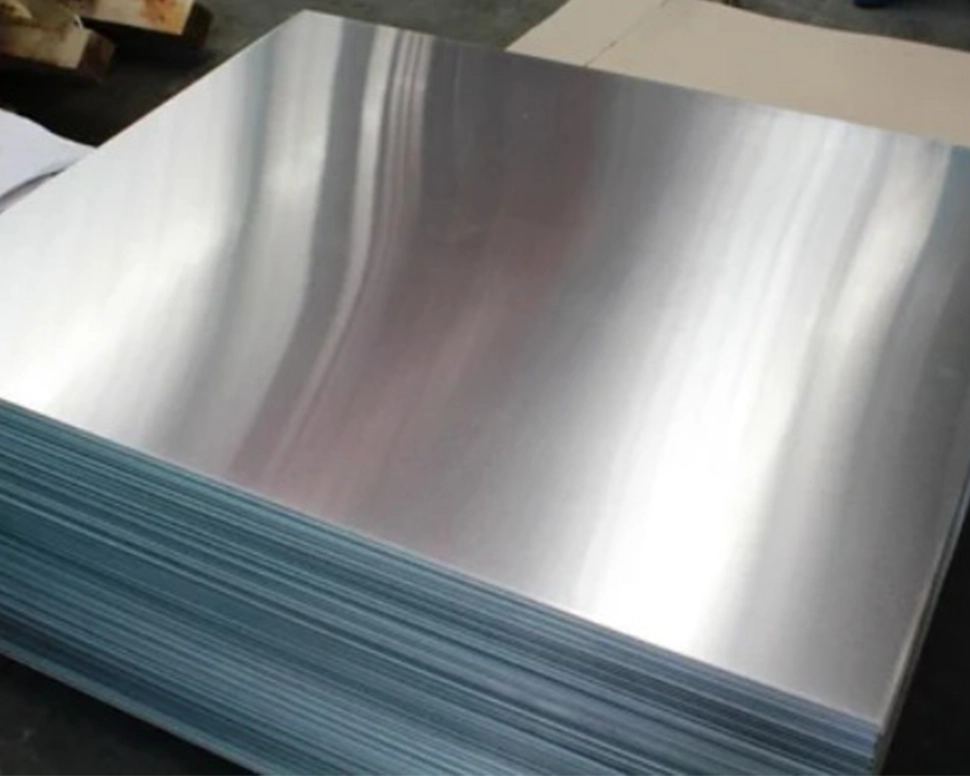
Why should we always choose stainless steel
the choice of stainless steel metal is the choice of the elite, as it is one of the best metals for health
it does not interact with any of the food components of all kinds, and stainless steel is a repellent for insects and all microbes.
Stainless steel or is named in proportion of being a type of metal that possesses a unique ability to resist stains and corrosion.
The unique values offered by stainless steel make it a strong candidate when choosing materials.
Engineers, specialists and designers may underestimate or overlook these values or advantages because they see an increase in the cost of stainless steel.
but for the life span of a project stainless steel is the best choice
In alloys of lower grades, stainless steel resists corrosion in environments of air and pure water.
In the case of alloys with higher grades, it can resist corrosion in environments that are more exposed to acids, alkaline solutions and chlorine.
We at ZIRVE guarantee you permanently and strictly that all machines and products manufactured in the company are made of food grade stainless steel
-History of the discovery of stainless steel
The corrosion resistance of iron-chromium alloys was recognized in 1821 by the French mineralogist Pierre Bertier, who noted its resistance to some acids and suggested its use in tableware. Nineteenth-century metallurgists were unable to produce the mixture of low carbon and high chromium found in most modern stainless steels, and the high chromium alloys they could produce were too brittle to be practical.
In 1872, the Englishmen Clark and Woods patented the alloy that is today considered stainless steel.
In the late 1890s Hans Goldschmidt from Germany developed a thermal aluminum (thermite) process for producing carbon-free chromium.
Between 1904 and 1911, many researchers, especially Léon Guillet from France,prepared the alloys that are today considered stainless steel.
In 1911 Philip Monartz reported on the relationship between chromium content and corrosion resistance. On October 17, 1912, Krupp engineers Benno Strauss and Eduard Maurer patented an austenitic stainless steel.
Similar developments occurred at the same time in the United States, where Christian Dantessen and Frédéric Beckett were making stainless steel from iron. In 1912 Elwood Haynes applied for a US patent on an alloy of martensitic stainless steel, which was not granted until 1919.
In 1912, Harry Brierley from the Brown-Firth Research Laboratory in Sheffield, England, while searching for a corrosion-resistant alloy for rifle barrels, discovered an alloy of stainless steel. The discovery was announced two years later in an article in the New York Times in 1915. In The New York Times. The metal was later marketed under the trademark "Stayberty" by Firth Vickers in England, and Burley applied for a US patent during 1915 only to find that Heinz had already patented it. Brierley and Heine combined their financing and a group of investors formed the American Stainless Steel Company, which is headquartered in Pittsburgh, Pennsylvania.
-stainless steel types
Stainless steel is divided according to composition into four main groups that differ from each other in their corrosion resistance, mechanical properties, cost and industrial use as well.
* “Martensitic stainless steel”
Alloys of this group are characterized by their containment of carbon, and they are magnetic and weldable in a low way, and their wear resistance is moderate, as the wear resistance of the alloys of this group is less than that of the alloys of the second and third groups, and its tensile strength and hardness are high, so it is used for purposes that require resistance High tensile strength and hardness and relatively moderate wear resistance.
Alloy 440 is used to make valve parts and ball bearings, and 420 is also used to make surgical instruments.
* “Ferritic stainless steel”
This type has a high content of chromium compared to other types. One of the most famous types of alloys of this group is Alloy 430, which is characterized by good corrosion resistance in the atmosphere, so it is widely used in the manufacture of car decoration parts, in factories for ammonia oxidation, and in the manufacture of household food utensils such as dishes and pots, as well as refrigerators and washing machines. 446 and 422 are characterized by sulfur resistance due to the presence of a high percentage of chromium.
Recently, another type of this group appeared, which is ferrite stainless steel of high purity, which contains a very small percentage of carbon and nitrogen, and the most important feature of it is the high mechanical properties of the welding area that other alloys lack. The most important aspect of the alloys of this group is their resistance to stress corrosion, especially in water containing chlorides.
* “Austenitic stainless steel”
Or as it is known in the series (200) and (300), the alloys of this group are the most widely used types of stainless steel due to their good mechanical properties and corrosion resistance. and nitrogen. We include from this group:
* Type (304) is considered the first and most widely used type and is also known as (18/8) because it consists of 18% chromium and 8% nickel.
* Type (306) is the second most widely used type (300) series, and is mainly used due to its high corrosion resistance because it contains 18% chromium and 10% nickel, and for this reason it is also known as steel (18/10), and often It is used in high quality knives and cookware.
* “Duplex stainless steel”
Duplex stainless steels have a mixed microstructure of austenite and ferrite, and the goal is usually to produce a 50/50 mixture, although the ratio may be 40/60 in commercial alloys. Duplex stainless steels have approximately twice the strength compared to austenitic stainless steels and also have improved resistance to localized corrosion, especially fault pitting, corrosion and pitting corrosion. They are characterized by higher chromium (19-32%), molybdenum (up to 5%) and lower nickel contents than austenitic stainless steels.
-Features of stainless steel technology
*corrosion resistance
In alloys of lower grades, stainless steel resists corrosion in environments of air and pure water.
In the case of alloys with higher grades, it can resist corrosion in environments that are more exposed to acids, alkaline solutions and chlorine.
*ease of formation
According to modern steelmaking techniques, stainless steel can be cut, welded and shaped with the same ease as traditional metals.
*Resistance
The microstructure of the 300 series provides a high degree of resistance at high temperatures, even at temperatures well below zero
This makes stainless steel particularly suitable for cryogenic applications.
*Long term value
When looking at total life cycle costs, stainless steel is often considered the least expensive choice in terms of material.
*Longevity
Stainless steel does not fade or lose color over time.
It is also rust and stain resistant, so it will maintain its luster and maintain all of its aesthetic qualities for many years to come
*germ resistance
Because stainless steel is impenetrable, it resists bacteria and germs more effectively than wood or plastic surfaces.
Stainless steel is cleaned using ordinary water after its use. Stainless steel is cleaned with ordinary water after its use.
It is an attractive choice for homes with young children or for anyone who wants to keep the kitchen as clean and immaculate as possible.
*aesthetically
Stainless steel can complement or coordinate with almost any kitchen or home design, and its elegance and luster make it a priority to balance with wood and plastic.
Aesthetically pleasing stainless steel can be used as a surface on any variety of applications.
Including dishwashers, washing machines, dryers, counter tops, refrigerators and freezers.
*Does not react with flavors or foods
Stainless steel is one of the healthiest surfaces available, so any food or material that may come into contact with the surface does not attract dirt or germs.
Stainless steel does not react with any foods that can be used during meal preparation and cooking
Newsletter
Enter your email address to get the lates news from us


At Zirve International, we are not just an ordinary industrial company; we embody uniqueness and excellence in the field of manufacturing and innovating integrated packaging systems. We take pride in our history spanning over 30 years of innovation and development, which has cemented our position as industry leaders due to our unwavering commitment to providing the best technologies and solutions to our valued customers.


